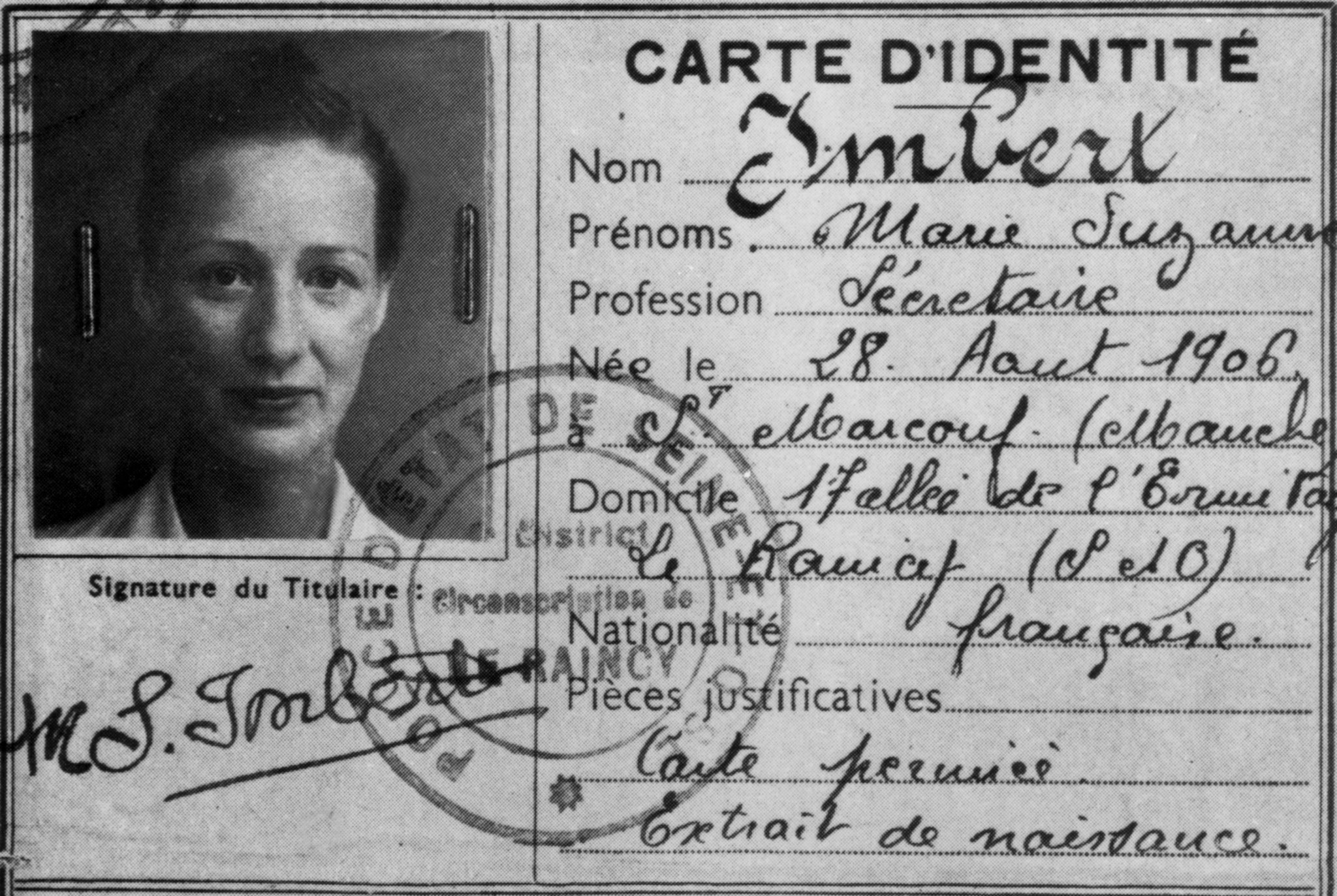

In July 1944, a naked woman squeezed through the bars of a Gestapo cell with her dress in her teeth, put it on in the dark, and walked out of town.
The Gestapo thought they had arrested a courier. Who they had actually caught, and just lost, was the commander of the largest Allied spy network in occupied France. They had been hunting her for three years and knew her only by her codename: Hedgehog.
It had never occurred to them that Hedgehog was a woman.
Rewind a few hours. A barracks cell in Aix-en-Provence, on a suffocating southern night. A 34-year-old Frenchwoman lay sweating on a cot, contemplating her situation. In the morning there would be an interrogation, and the interrogation would not be polite, because sooner or later someone was going to work out who they had actually picked up in the raid.
She got up and tested the bars on the window. Too narrow…for a clothed person. So off came everything, dress clamped between her teeth, one shoulder through, then her head, skin scraping iron, until she dropped into the dark on the other side. She put the dress on and walked out of town, past the war memorial with its list of the dead from the last war, and made cover before sunrise. Then she got word to her agents and went back to work.
The invasion was on; there was no time to be traumatized.
Her name was Marie-Madeleine Fourcade. The Gestapo called her network Noah’s Ark. And this is the story of the woman who ran it, the 3,000 people who filled it, and what it cost them.
Good God, It’s a Woman

She was born in Marseille in 1909 into money and comfort, raised partly in Shanghai, educated for a life of pianos and dinner parties. Marrying a colonial army officer at 20, she had 2 children, and then left him. By her late 20s she was working in Paris for an intelligence-adjacent publication run by a decorated army officer named Georges Loustaunau-Lacau, codename Navarre, who was convinced France was about to be invaded and that espionage would decide the war.
He was right on both counts. When France fell in 1940, Navarre began building a clandestine intelligence network to feed information to the British, and he recruited Fourcade to help him build it. Her first assignment: divide unoccupied France into sectors, recruit an agent for each, and wire it all together. She was barely 30, and she was damn good at it.
In July 1941, Navarre was arrested. From prison, he sent word naming his successor. Fourcade.
Picture the moment from the agents’ side. Occupied France, 1941. Radio operators, ex-military men, aristocrats, fishermen, police officials quietly betraying Vichy. Word comes down that the new chief is a 31-year-old woman. One new recruit, brought to a café to meet the leadership, watched her walk to the table and blurted out, “Good God, it’s a woman.”
But decorated officers, men twice her age, stayed, taking her orders for four years. She was, for the entire war, the only woman to serve as the chief of a major French resistance network. Her British handlers at MI6, not an organization famous for feminism, saw her results and kept funding her.
Because the question was never whether the men would follow a woman. It was whether they could keep up.
The Ark

The network’s formal name was Alliance. The nickname came from the Nazis.
After a wave of arrests, Fourcade rebuilt the network’s security from the ground up, decentralizing the cells and reassigning every agent a new alias. Wolf, Tiger, Eagle, Magpie, Ermine, Elephant. When the Gestapo began intercepting traffic and found themselves hunting a zoo, they gave the network the name that stuck: l’Arche de Noé. Noah’s Ark.
For herself, Fourcade chose Hedgehog. A friend of hers explained that a hedgehog is a small, unthreatening creature that “even a lion would hesitate to bite.”
The Ark’s job was simple. Watch the Germans, and tell London everything; troop movements, submarine schedules out of the Atlantic ports, airfields, supply depots, coastal defenses. All of it was collected by some 3,000 agents and moved to Britain by clandestine radio and courier.
The network stretched across the whole of France, and it lasted longer than any comparable network of the war, despite year after year of arrests, infiltrations, and executions. Fourcade rebuilt it each time from wherever she was hiding.
She ran it from safe houses. She ran it disguised, her hair dyed, her jaw altered with cotton padding. In 1941 she crossed the Spanish border folded inside a diplomatic mail bag to reach a meeting with British intelligence in Madrid. The head of a spy network, smuggled like a parcel, because there was no safer way to move her.
In November 1942, she was arrested with her staff, and escaped with the help of Vichy policemen who were secretly on her side. In July 1943, with the Gestapo closing in, she was flown to England and ran the network from a house in Chelsea, which she hated, because her agents were in France and she was not.
Her MI6 handler, Claude Dansey, told her that an underground leader lasts, on average, six months. She had lasted years.
“It’s sheer witchcraft,” he said.
It was not witchcraft, though. She simply rebuilt faster than the Gestapo could burn.
The intelligence kept coming, and some of it changed the war. One of her agents, a young woman named Jeannie Rousseau, made herself charming and apparently harmless to Wehrmacht officers until one of them drew her the rocket testing site at Peenemünde; this was intelligence that helped reveal the V-2 program to the Allies and put British bombers over the site.
And in Caen, an Alliance agent named Robert Douin, a sculptor, led a team that spent months walking, sketching and measuring the Normandy coast, producing a map 55 feet long showing the German defenses of the invasion beaches: gun emplacements, fortifications, the obstacles waiting on the sand.
It reached Allied commanders months before D-Day. The men who came ashore on June 6, 1944 came ashore holding the Ark’s sketches.
The Germans shot Douin just as the invasion began.
Eagle

Which brings us to the cost.
Fourcade’s chief of staff was a decorated air force officer named Léon Faye. Codename: Eagle. He was one of the men who had heard the new chief was a woman, and followed her without hesitation. He crisscrossed France recruiting operatives by the hundreds, including a teenage film star named Robert Lynen, who packed radio parts into his costume trunk and called spying his finest role.
The Nazis eventually shot Lynen too. He was 23.
Faye and Fourcade fell in love right smack in the middle of all of it. In June 1943, hiding in Lyon with the Gestapo hunting her, she gave birth to their son. She was running the largest spy network in France while pregnant, on the run, under a false name. She barely paused.
Three months later, Faye was captured. He went through the camps, attempted escapes, was locked down harder each time; and in January 1945, with the war nearly over, the Germans executed him.
Fourcade learned the details only afterward. People who knew her said she never fully recovered, and her own memoir, decades later, could hardly bear to speak of him.
He was one of hundreds. More than 400 of the Ark’s agents died in German custody: shot, beheaded, worked to death in the camps, many of them under the Nazi Nacht und Nebel decree.
Night and Fog, designed to make resisters vanish without record.
Les Invalides

She escaped the cell at Aix through the bars, naked, in the small hours, and kept the network running through the liberation, gathering intelligence for the advancing Allies as the Germans fell back across France. When it was over, she was 35 years old.
She had commanded the longest-lasting and most productive Allied intelligence network of the occupation, survived two captures, outlived the Reich that had hunted her, and lost 429 of her people.
Then de Gaulle’s new France drew up its official roll of the heroes of the liberation, the Compagnons de la Libération. More than a thousand names.
Hers was not on it.
Because that’s what happens to a woman who commands men brilliantly in a war. The peace arrives, and the men who write the rolls develop amnesia.
Here is what she did about it. She did not spend the rest of her life campaigning for her own recognition. Instead, she founded and ran the association that cared for the Ark’s 3,000 surviving agents and the families of its dead. She compiled the Mémorial de l’Alliance, the roll of the 429, name by name, fate by fate. The anti-Nacht und Nebel, the document that made sure the people the Nazis had tried to disappear were recorded.
The regime that invented night and fog lasted 12 years. Her memorial to its victims is still in print.
In 1968, she finally told the story herself, in a memoir she titled with the enemy’s own nickname: L’Arche de Noé. Noah’s Ark. It was a bestseller. She served in the European Parliament, was made a Commander of the Legion of Honor, and on July 20, 1989, at 79, she passed away in a military hospital in Paris.
Six days later, the French state carried her into the Église Saint-Louis at Les Invalides; the sacred military heart of France, the complex that holds Napoleon’s tomb, for her funeral. No woman had ever been given a funeral there. In two centuries of marshals and generals, she was the first.
The men who left her off the list of heroes in 1945 had to watch France carry her through those doors in 1989.
She was buried at Père-Lachaise under a modest stone, which is very Hedgehog of her: unthreatening in appearance.
So a woman nobody was looking for, because nobody thought to look for a woman, ran 3,000 agents under the Gestapo’s nose for four years. Her people mapped the beaches that won D-Day and pulled the V-2 program into the light.
She was smuggled in a mail bag, escaped through prison bars with her dress in her teeth, gave birth on the run, and buried the man she loved and 428 of his fellow animals. Her country’s gratitude arrived 44 years late, through the doors of Les Invalides.
And in between, she did the punkest thing in this whole story, braver than any escape. Against a regime built on making people vanish without record, she sat down and wrote every single name.
Marie-Madeleine Fourcade. The Hedgehog. The one even a lion would hesitate to bite. But it turns out, she had the sharpest teeth of them all.
Thanks for reading!

If you like our work, please subscribe, share, and post freely! You can find us on Threads, where we post a different thread about women in history most days. Or buy us a coffee, all proceeds go to research and funding this site.
Announcement about our book is coming soon, watch this space, or subscribe to be the first to know!
Leave a Reply